





In an automotive landscape where reliability has become a central criterion, vehicle recall data is scrutinized as a barometer of quality. In 2025, it wasn’t some fledgling brand still establishing itself that dominated the recall charts, but rather one of the industry's historical giants.
Ford far ahead
According to data compiled from the official records of the National Highway Traffic Safety Administration (NHTSA) in the U.S., Ford holds the top spot on the list, and by a significant margin. The automaker’s 113 distinct recalls affected a gigantic number of vehicles - 12.9 million.
Toyota and Stellantis follow
That figure was more than four times that of the surprise second-place finisher, Toyota, traditionally praised for the durability of its models but which came in second with approximately 3.2 million recalled vehicles. Stellantis completed the podium with nearly 2.7 million units affected by one recall or another.
The rankings do not necessarily mean that those brands are inherently less reliable. Indeed, recalls cover a broad spectrum of issues, ranging from minor defects, such as finicky backup cameras, to more serious risks, for instance components that could cause a fire.
See also: The Top 5 Weirdest Automotive Recalls of 2025
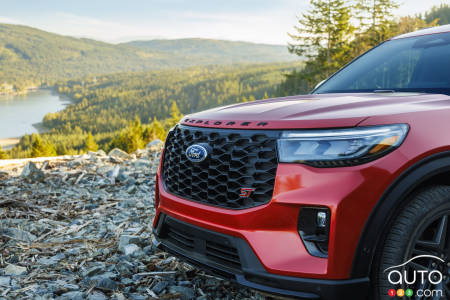
Speaking of backup cameras, some 4 million of Ford’s recalled vehicles were called to the shop specifically for camera issues. While irritating for drivers, this type of issue doesn’t always mean there’s an immediate danger.
Still, Ford's numbers do raise crucial questions about quality management. A company that recalls millions of vehicles every year must question the effectiveness of its control processes. Ford saw a multiplication of campaigns across all its product families: from F-Series pickups to Bronco and Explorer SUVs, not forgetting the popular Maverick.
Honda and Hyundai not spared
Further down the rankings, Honda stood out with 1.56 million recalled vehicles. Hyundai also exceeded the one million unit mark, although this is a marked decrease compared to previous years. Their totals serve as a reminder that even modern Asian brands are not immune to production defects.
General Motors and Kia bring up the rear, just under the one million unit mark, with issues affecting various mechanical or electrical components.
In the electric vehicle sector, Tesla drastically reduced its total number of recalls compared to 2024, with approximately 745,000 units targeted in 2025. The decrease shows that certain recurring issues, such as steering or display problems, are being handled more effectively or are affecting a smaller fleet of vehicles.
For consumers, the statistics should be interpreted with caution. A high number of recalls can testify to a manufacturer's proactivity in correcting defects rather than allowing faulty vehicles to remain on the road. Moreover, the surge in the numbers of recall campaigns illustrates the growing complexity of modern automotive systems and the quality challenges that imposes on manufacturers.