





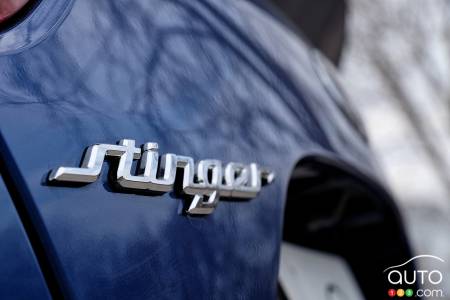
For a brief window between 2018 and 2023, Kia did the unthinkable. In an era dominated by a sustained stampede in the direction of SUVs, the South Korean automaker introduced a rear-wheel-drive, twin-turbocharged V6 sport sedan. The Kia Stinger challenged German stalwarts on both performance and soul.

Sadly, and perhaps inevitably, the model was discontinued last year. Folks may have loved the car, but not enough of them bought one. But Kia has now confirmed that a spiritual, electric successor is in its plans. Its starting point, the wild, angular Vision Meta Turismo concept.
Unveiled during Kia’s 80th anniversary celebrations, the Meta Turismo marked a pivot in the brand’s design philosophy, dubbed “Opposites United: Evolution.” But while Kia Design Chief Karim Habib told Autocar that the brand’s the design team has already produced a model that is “90-percent production-ready,” he also cautioned that the project faces one significant hurdle: the cold, hard logic of economics.
The cost of performance
The primary factor keeping the electric Stinger successor from the assembly line is the high cost of high-performance electric vehicle (EV) components. Habib told Autocar that while the brand is eager to move beyond its “sea of SUVs,” the price of building a performance-oriented EV remains a strategic challenge.
"It's a pure EV and the price of doing a high-performance EV is what is slowing us down," Habib explained. The brand is essentially betting on the “upward movement” of the EV market to eventually make a low-slung, charismatic sedan financially viable. Unlike mass-market electric crossovers, which can hide battery costs behind higher sales volumes and practical proportions, a “super-GT” requires expensive architecture to maintain the performance enthusiasts expect from the Stinger name.
Designing for the Gamer Generation
Kia describes the Vision Meta Turismo as a “sports sedan for the gamer generation.” This isn’t just marketing fluff; it represents a shift in how Kia approaches emotional engagement. Jochen Paesen, head of interior design, noted that younger buyers aren't necessarily triggered by the V8 roars that moved previous generations. Instead, Kia is focusing on a “radically minimalist” and “tech-led” approach to create an emotional tie through user experience and futuristic aesthetics.
The concept moves away from the “jellybean” aerodynamics typical of modern EVs, opting instead for a striking, aggressive silhouette. According to European design boss Oliver Samson, the team had to prove that such a radical shape was physically possible before moving forward with production plans.
Standing out in a changing market
If it were to come to pass, a Stinger revival would face another challenge. By the time a production version could arrive, likely toward the end of the decade, it will face stiff competition from established players, not least the upcoming 2027 BMW i3.
All the same, Kia maintains it’s committed to the idea that a brand must build cars people have an emotional connection to. Statistics show that while SUVs continue to dominate, accounting for over 50 percent of new vehicle sales in many Western markets, there remains a loyal, albeit smaller, segment of what Habib calls enthusiast buyers. Kia’s goal is to leverage the success of its profitable SUV lineup to fund these emotion-based projects.
On certainty coming out of these new declarations is that the Vision Meta Turismo is more than just a styling exercise; it is Kia’s attempt to remain authentic in an increasingly sterile electric age. The car exists, and the technology works. Now, Kia is simply waiting for the market to catch up to the price tag of progress.