





So how will a tuned Honda save lives, asks the skeptic in all of us? Well as I mentioned, Pacer relies upon education and opportunity. Once communication has been established and the street racers, sports car enthusiast clubs and the like are listening, a well-crafted message regarding the consequences of unsafe driving (both legal and physical) can be delivered by the police and Pacer members. The Pacer motto is, "take it to the track."
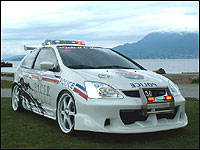 |
| Racer modifications usually don't place safety as a priority, but it's hoped the Pacer will be an example of how to modify safely. (Photo: Rob Rothwell) |
The Pacer car also serves as a do-it-right model on how to safely modify a car. Face it, racers and sports car enthusiasts modify their vehicles hoping to improve performance as well as the awe-factor. Unfortunately such modifications can result in a vehicle that is unsafe for public roadways. Suspension and chassis alterations drastically affect a vehicle's handling characteristics, especially on irregular or slick road surfaces. Combined with speed and driver inexperience, the results are predictable.
"Okay, I get the educational aspect of Pacer, but what's this opportunity stuff you've mentioned?" The opportunity is this: Rather than bury our collective heads in the sand and hope that it will all blow over, it's important to accept that young adults are going to race their cars. Pacer is leading the way in establishing safe, sanctioned venues for racing. These venues are a combination of drag racing and solo racing opportunities. (Solo racing is man and machine racing singularly against the clock, usually around a course outlined with traffic cones).
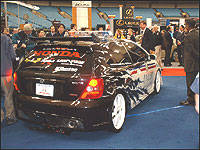 |
| Educate them, ensure they are safe, and give them a place to race, and the hope is racers will move off the street and onto the track. (Photo: Rob Rothwell) |
So the theory goes like this: Befriend the potential racers; educate them about the dangers and legalities of their activity; ensure their vehicles are safe and in compliance; provide them with sanctioned, inexpensive venues in which they can safely compete. With these strategies in place, the local police authorities must adopt a zero-tolerance policy in regard to illegal street racing and aggressive driving. Support from the judiciary for these efforts is required. Sentencing of those who fail to "take it to the track" must be meaningful in order to prevent repetition and deter others from participation. Street racing and dangerous driving affects us all. Regrettably there is no quick fix or panacea.