





In competition, Shelby's specially prepared roadsters showed tremendous promise but proved to be short on stamina. Typically, the Cobras would get off to a impressive start only to falter before the finish. Throughout the fall of 1962 and early 1963, the machines were inconsistent at best. By mid-June, however, with the Cobra's reliability problems finally licked, the cars won 11 of the 16 races in the Sports Car Club of America's (SCCA) grand touring class, among other accomplishments.
But the prize that both Ford and Shelby desired above all was to win the French 24 Hours of Le Mans, considered the Holy Grail of international endurance racing. The Cobra roadster, which spit out plenty of venom from its 370-horsepower racing motor, was not particularly aerodynamic, which limited its top speed. An entrant in the 1963 contest had finished seventh, a respectable showing, but far short of desired results -- to win it all.
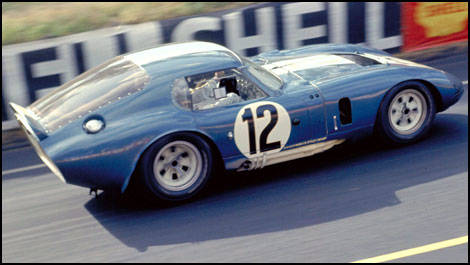
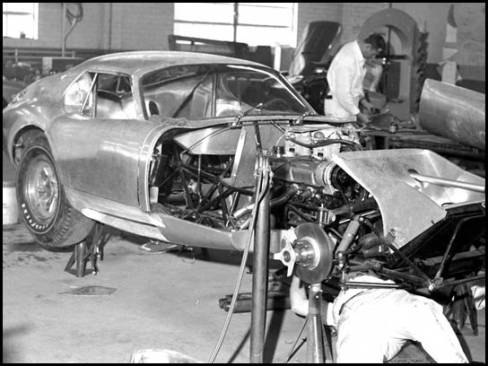
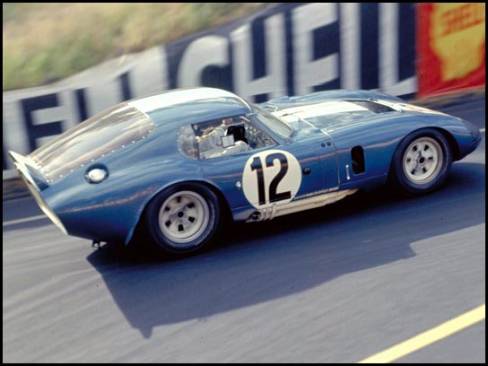
Clearly, a more aerodynamic shell was needed. To that end, Pete Brock, a young race driver and Shelby designer, penned a gorgeous enclosed fastback coupe. In a scant three months the prototype's sheetmetal had been bent, hammered and molded into shape, then welded into a single piece and bolted onto a modified Cobra roadster chassis.
The result was called the Daytona since the 2,000-kilometre Daytona Continental road race (held at Daytona International Speedway in Florida) was where it would make its 1964 debut. Initial testing had proven that, despite being 60 kilograms heavier, the Daytona could reach a top speed of 290 km-h -- 30 km-h faster than the roadsters -- while its wind-cheating silhouette gave improved fuel consumption.
In its first start, the Viking Blue coupe stayed well ahead of the competing Ferrari GTOs. Unfortunately, with two-thirds of the race completed, a fire in the pits crippled the car and Ferraris claimed the top three spots.
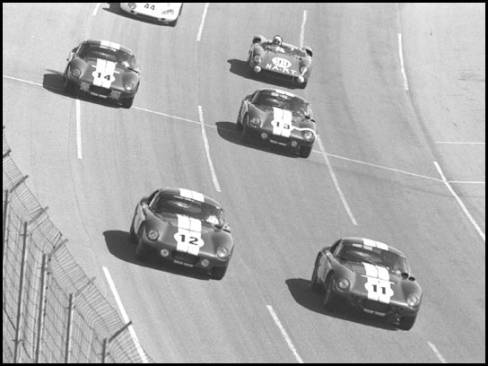
After losing again to Ferrari weeks later at the 12-hour Sebring, Fla. race, Shelby prepared two Daytona coupes for European competition, specifically Le Mans. Both began well, but there was plenty of nail-biting among the crew members when one of the cars was knocked out with an electrical problem eight hours into the race. The second Daytona,which had been completed just days earlier, also experienced problems late in the contest but managed to limp home ahead of the Ferraris to finish in fourth place overall and first in its grand touring class.
The coupes won a few more races that year before Shelby regrouped for the '65 season. Improvements included a horsepower increase (in the 380-385 range) and revisions to front and rear suspensions. There were a total of six competition Daytonas, one of which contained Ford's muscular seven-litre V8 that belted out 460 horsepower. Unfortunately, the big-cube Daytona was illegal for international competition according to International Automobile Federation (FIA) rules since fewer than the minimum 100 copies of the seven-litre Cobra existed at the time. (Later, a detuned version of this engine would find its way into about 350 civilian Cobra roadsters.) Shelby was forced to stick with the smaller-engined Daytonas. Throughout the '65 campaign, the coupes finished first or placed high enough in the standings for the team to eventually capture the first international trophy ever won by an American organization.
Ford's decision to concentrate on its mid-engined GT40 program spelled the end for the Daytona's officially sponsored race career. In just two short years, it ran with, and frequently beat, Enzo Ferrari's best, showing the world that a tough-but-simple Ford V8 encased in an eye-popping body was in a class by itself.
photo:Ford
 |
But the prize that both Ford and Shelby desired above all was to win the French 24 Hours of Le Mans, considered the Holy Grail of international endurance racing. The Cobra roadster, which spit out plenty of venom from its 370-horsepower racing motor, was not particularly aerodynamic, which limited its top speed. An entrant in the 1963 contest had finished seventh, a respectable showing, but far short of desired results -- to win it all.
Clearly, a more aerodynamic shell was needed. To that end, Pete Brock, a young race driver and Shelby designer, penned a gorgeous enclosed fastback coupe. In a scant three months the prototype's sheetmetal had been bent, hammered and molded into shape, then welded into a single piece and bolted onto a modified Cobra roadster chassis.
The result was called the Daytona since the 2,000-kilometre Daytona Continental road race (held at Daytona International Speedway in Florida) was where it would make its 1964 debut. Initial testing had proven that, despite being 60 kilograms heavier, the Daytona could reach a top speed of 290 km-h -- 30 km-h faster than the roadsters -- while its wind-cheating silhouette gave improved fuel consumption.
In its first start, the Viking Blue coupe stayed well ahead of the competing Ferrari GTOs. Unfortunately, with two-thirds of the race completed, a fire in the pits crippled the car and Ferraris claimed the top three spots.
After losing again to Ferrari weeks later at the 12-hour Sebring, Fla. race, Shelby prepared two Daytona coupes for European competition, specifically Le Mans. Both began well, but there was plenty of nail-biting among the crew members when one of the cars was knocked out with an electrical problem eight hours into the race. The second Daytona,which had been completed just days earlier, also experienced problems late in the contest but managed to limp home ahead of the Ferraris to finish in fourth place overall and first in its grand touring class.
The coupes won a few more races that year before Shelby regrouped for the '65 season. Improvements included a horsepower increase (in the 380-385 range) and revisions to front and rear suspensions. There were a total of six competition Daytonas, one of which contained Ford's muscular seven-litre V8 that belted out 460 horsepower. Unfortunately, the big-cube Daytona was illegal for international competition according to International Automobile Federation (FIA) rules since fewer than the minimum 100 copies of the seven-litre Cobra existed at the time. (Later, a detuned version of this engine would find its way into about 350 civilian Cobra roadsters.) Shelby was forced to stick with the smaller-engined Daytonas. Throughout the '65 campaign, the coupes finished first or placed high enough in the standings for the team to eventually capture the first international trophy ever won by an American organization.
Ford's decision to concentrate on its mid-engined GT40 program spelled the end for the Daytona's officially sponsored race career. In just two short years, it ran with, and frequently beat, Enzo Ferrari's best, showing the world that a tough-but-simple Ford V8 encased in an eye-popping body was in a class by itself.
photo:Ford
Article Gallery