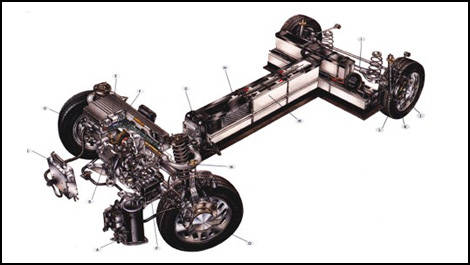
It appears that General Motors, one of the companies that killed the EV1 in 2001, could resurrect the electric car project by introducing the Chevrolet Volt in 2010 -- if all goes as planned. Considering the speculative gas prices, it's time automakers seriously start thinking about coming to market with electric vehicles capable of offering a more than reasonable range. Having gained experience from the EV1 and the ensuing developments on hybrid technologies, GM created an electric vehicle that uses a combustion engine to recharge the lithium-ion battery pack that powers the electric motor.
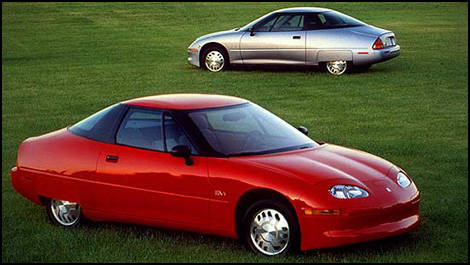 |
| Saturn EV1 |
Some of you might vaguely recall GM's first foray into the electric vehicle segment in 1996. Why did the American manufacturer undertake such a perilous venture? Simply put, they wanted to meet the new Californian regulations (implemented a few years earlier), according to which 2 percent of all the vehicles sold should produce absolutely zero toxic emissions. GM therefore had to invest over one billion dollars in R&D and marketing (the Clinton administration eventually backed this entire investment). Some 1,100 EV1s were produced and 800 of them were leased for a three-year period to residents of California and Arizona, who were very happy to consume in electricity a third of the amount of fuel normally used by a similarly-sized vehicle.
At the time, the EV1 was considered as the most fuel-efficient vehicle. In addition to accelerating from 0 to 100 kph in 9 seconds, this two-seater had an electric range of 200 km. When the time came to recharge the batteries, all you had to do was plug the car into a 220-volt outlet. Unfortunately, at the end of the three-year lease trial, GM recovered the vehicles, destroyed them and cancelled the program.